Hardware · long-range bridge

Stretch the mesh for miles.

BLE reaches across a room. The Hop Bridge reaches across a valley, a small, weatherproof device that carries the Hop mesh over a long-range 900 MHzradio, linking local peer-to-peer clusters kilometres apart with no tower and no internet.
BLE ↔ 900 MHzMulti-firmware radioSolar or USB-C
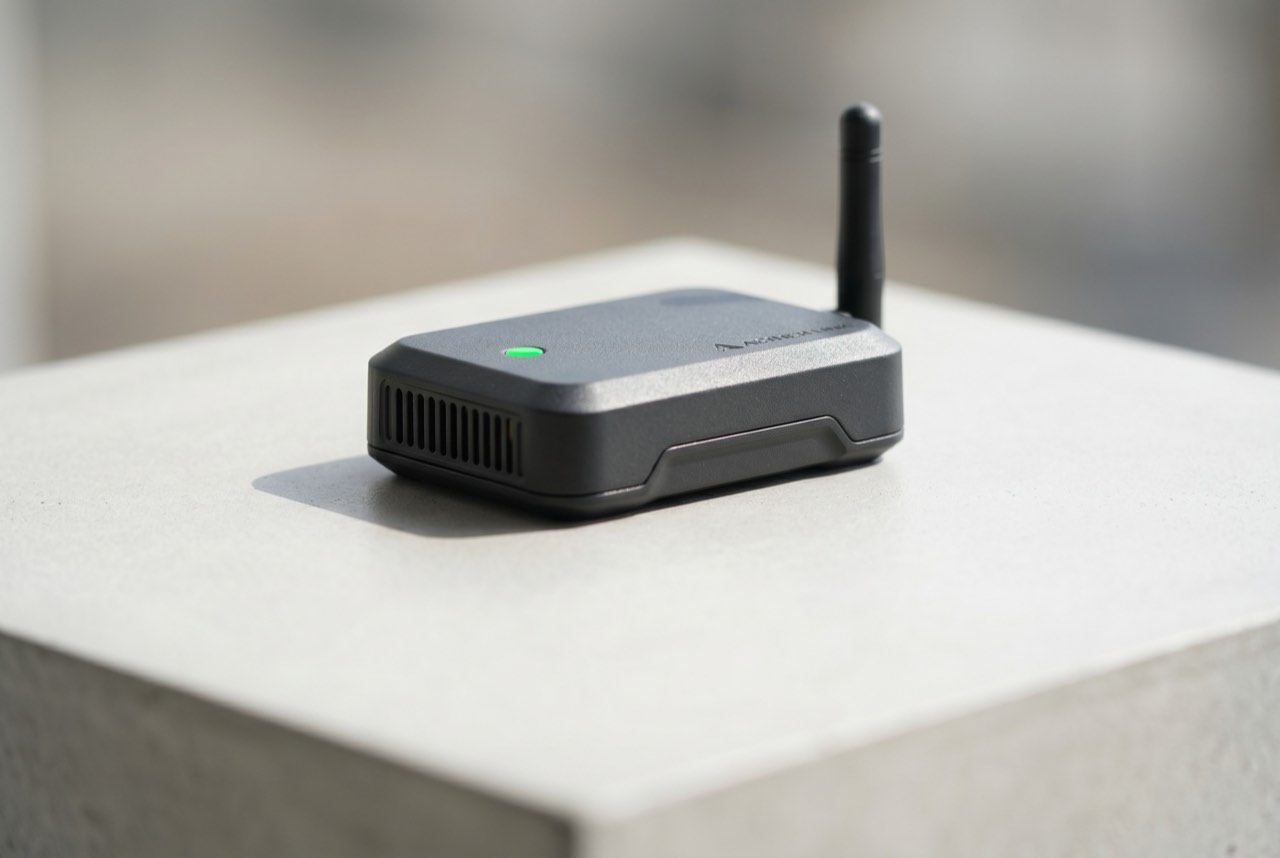
The Hop Bridge, a small matte-charcoal weatherproof device with a short antenna and a green status light
What it is

A bridge between near and far.

Drop one bridge at the edge of each local cluster. Between them it speaks a long-range 900 MHz radio, low-power, line-of-sight, so a sealed Hop message hops out of one peer-to-peer crowd, across open ground, and into the next. The protocol above never changes; only the distance does.

Kilometres, not metres

The 900 MHz radio carries small, sealed Hop bundles line-of-sight across open terrain, orders of magnitude past the reach of BLE or Wi-Fi.

Built on ESP32

An ESP32 joins the local mesh over BLE on one side and drives the 900 MHz radio module on the other. Commodity parts, open design.

Carries, never reads

The bridge relays ciphertext like any Hop relay. It extends range without becoming something to trust.

One radio, many waveforms

It doesn't have to be LoRa.

The 900 MHz radio is multi-firmware. LoRa is the obvious first waveform, proven, long-range, license-free in the sub-GHz ISM bands, but it's not the only one. Other robust sub-GHz modulations run on the very same chipset.

Pick the waveform that fits the job: maximum range, higher throughput, or whatever your region's spectrum rules allow. Same hardware, same sealed Hop bundles riding across it, flash the firmware that suits the deployment. The network that finds a way finds the waveform too.

On the 900 MHz side
  • LoRa, longest range, lowest data rate; the default.
  • (G)FSK & other sub-GHz modes, more throughput where range allows.
  • License-free sub-GHz ISM bands (region-dependent).
  • Swappable firmware, one device, re-tuned to the deployment.
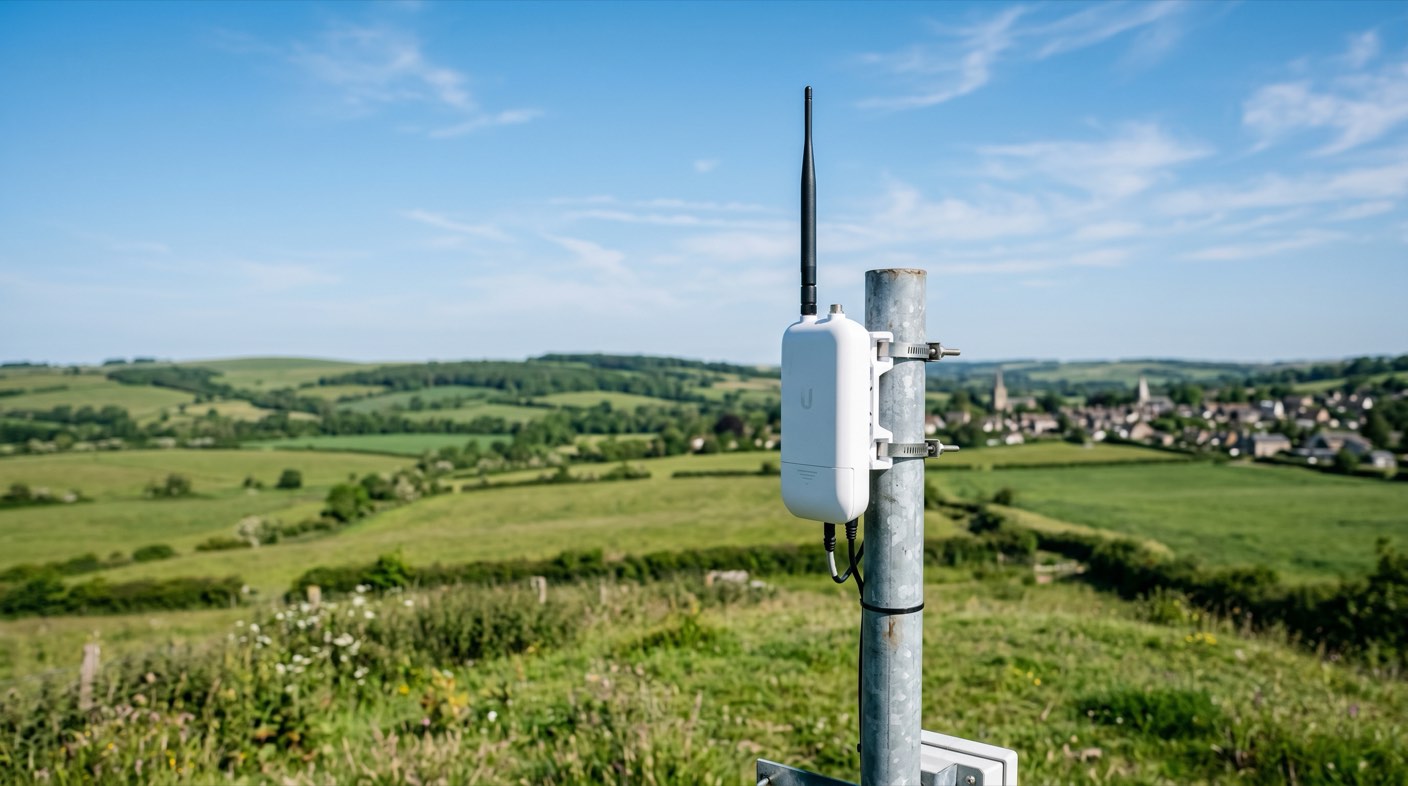
A Hop Bridge mounted on a pole over open countryside, a distant town on the horizon
Where it fits

For ground too big for a phone radio.

Anywhere people and devices are spread across distance the radio in a phone can't cross.

Agriculture

Sensors and crews spread across fields and orchards, kilometres from the nearest building.

Parks & trails

Ranger stations, trailheads, and remote huts stitched into one network without laying cable.

Disaster & response

Drop bridges to re-connect neighbourhoods when towers are gone, coverage that arrives in a backpack.

Maritime & marina

Boats, docks, and shore spread beyond a phone's reach, long-range links that don't need a satellite plan.

Sites & yards

Mines, ports, and industrial campuses where wiring every corner is impractical.

Field operations

Teams working past coverage who need their own network to come with them. Public safety & defense →

How it works
  • Two bridges sit at the edges of separate peer-to-peer clusters and link over the 900 MHz radio.
  • Sealed Hop bundles cross the long-range link unchanged, fragmented to the radio's frame size and reassembled on the far side.
  • The bearer is the only thing that changes; everything above, hdp, messaging, sync, hops://, runs exactly as it does over BLE or Wi-Fi.
At a glance
  • Bearer, BLE ↔ 900 MHz (LoRa + other sub-GHz firmware)
  • Compute, ESP32
  • Power, solar panel or USB-C
  • Enclosure, weatherproof, pole-mountable
  • Role, extends the mesh; carries sealed traffic only

Target specs, the bridge is in development. Numbers and form factor will firm up through the pilot.

Help us range-test the mesh.

The Hop Bridge is in development and we're opening a pilot program. If you've got distance to cover, a farm, a park, a response plan, a campus, tell us the scenario and we'll fit a unit to it.